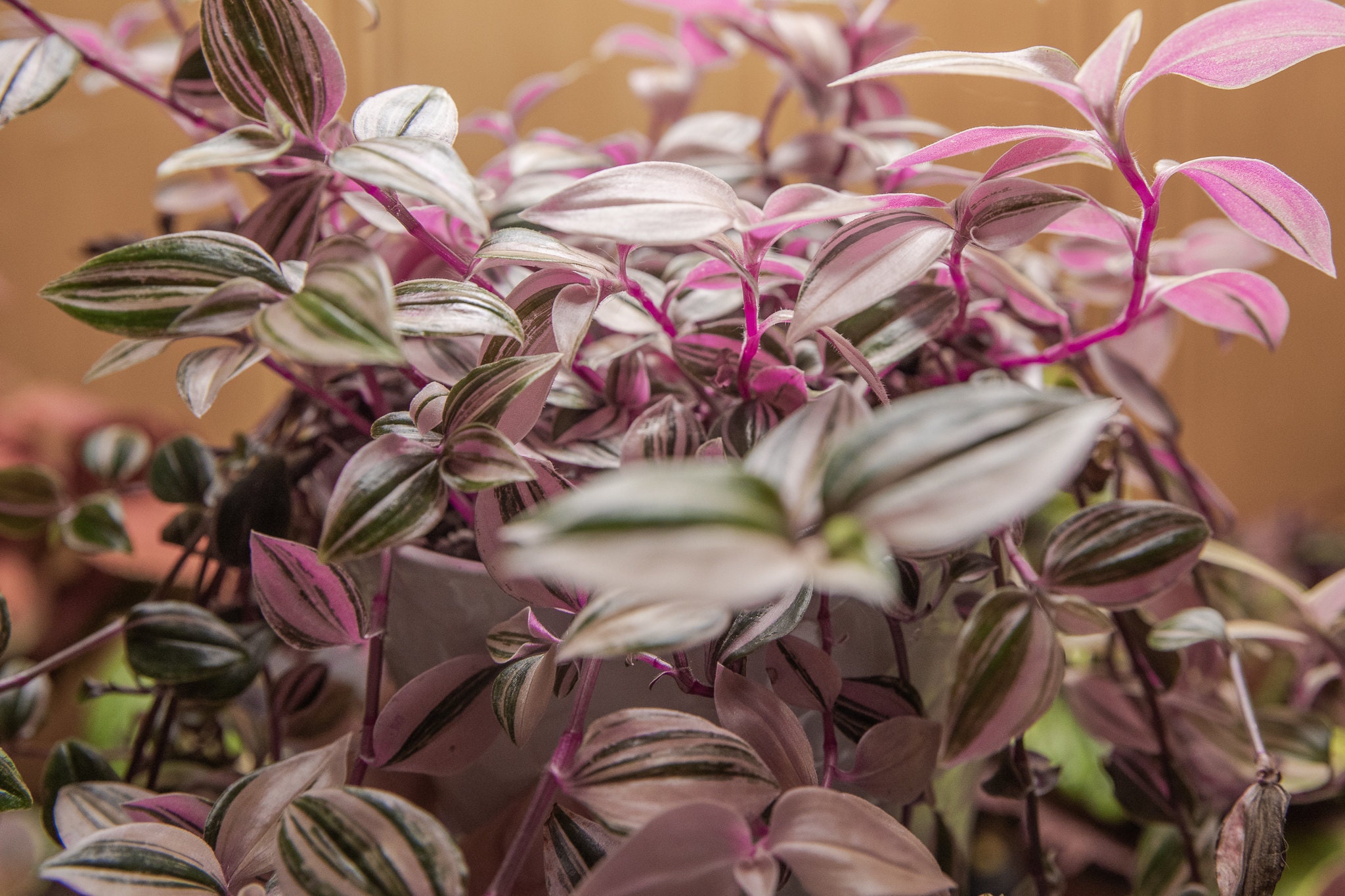
The Tradescantia genus is a very popular plant because of it's low care requirements and large variety. It has beautiful colored leaves with a wide variety to choose from. They range from the very trendy Nanouk, to vibrant rare quadri-colors to the traditional Zebrina commonly known as "Wandering Jew". Tradescantias are mostly used as hanging plants. They are low maintenance plants that are great for beginners.
Identification & Growing Conditions
T. Albiflora
Tradescantia albiflora is the variety most people are familiar with. This plant has white flowers that bloom in late spring or early summer depending on how much you water it. When watering, make sure to let water run through the soil well to avoid getting salts stuck on the leaves. The flowers appear like little white craft glue bubbles. T. albiflora comes from Brazil, but some varieties are native to the United States as well.
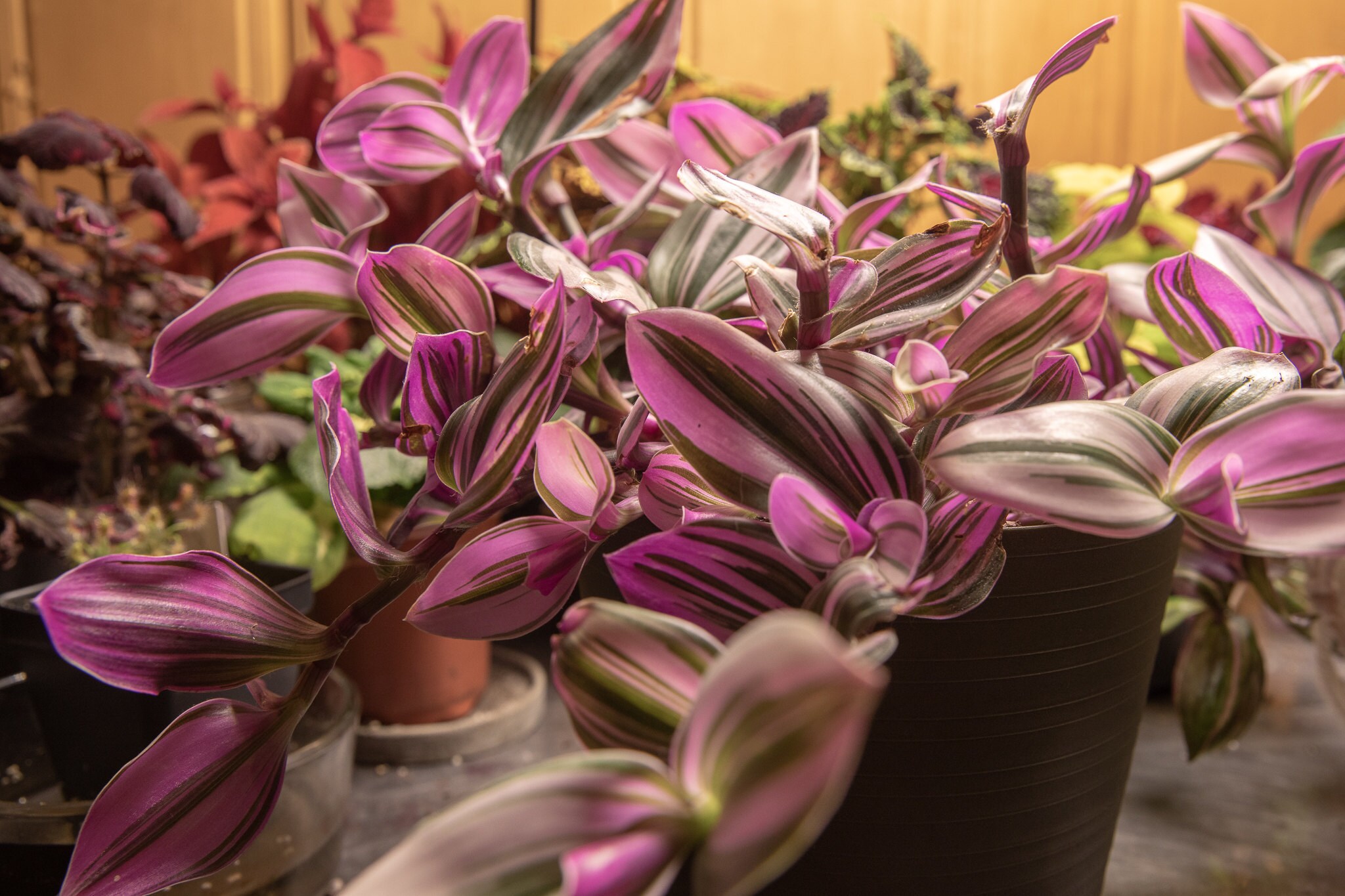
Tradescantia Nanouk, also known as Fantasy Venice, is the trending plant on Instagram right now. It's vibrant pinks, purples and greens are breathtakingly beautiful and it stands out in any room.
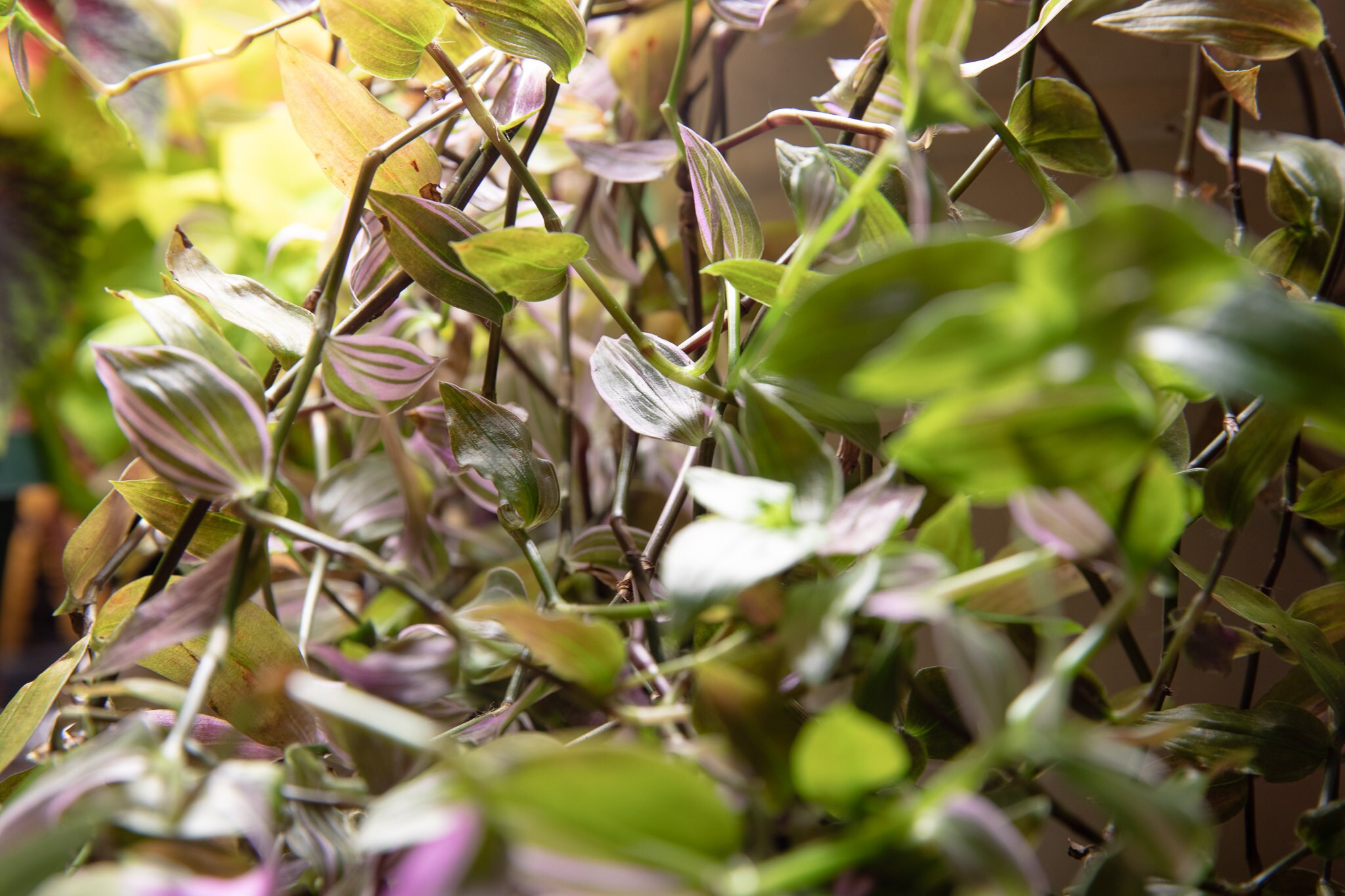
T. Fluminensis
Tradescantia Fluminensis is similar in care requirements, but has yellow flowers that bloom in late spring or early summer depending on how much you water it. The leaves are typically thicker than albiflora, and it tends to grow more aggressively and requires some prunning and training. T. fluminensis is native to Brazil, Argentina, Paraguay, Uruguay, and Bolivia.Fluminensis varieties are a bit more sun resistant and seem to do fine in full sun. In this genus, the white veins on the leaves will fade over time in direct sunlight. The newer cultivars seem to have brighter white veins, though.
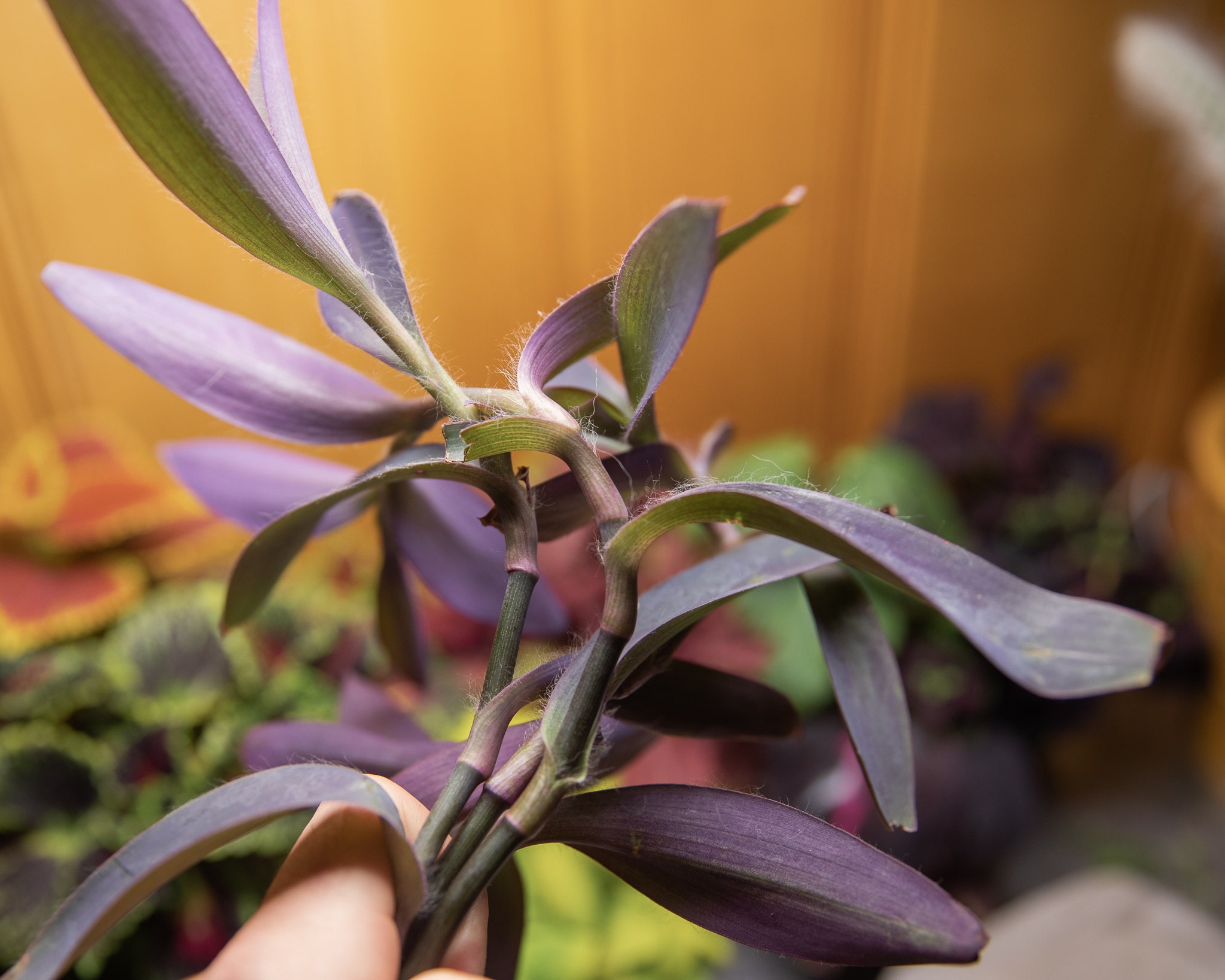
T. pallida 'Purple Heart'
Tradescantia pallida has purple-red petioles or stems, with purple veins on the leaves. Sometimes they have white flowers as well. The plants spread very aggressively by runners and can fill a large space in no time. They also seem to need more water than other varieties, and I find they do best with weekly watering and more fertilizer.
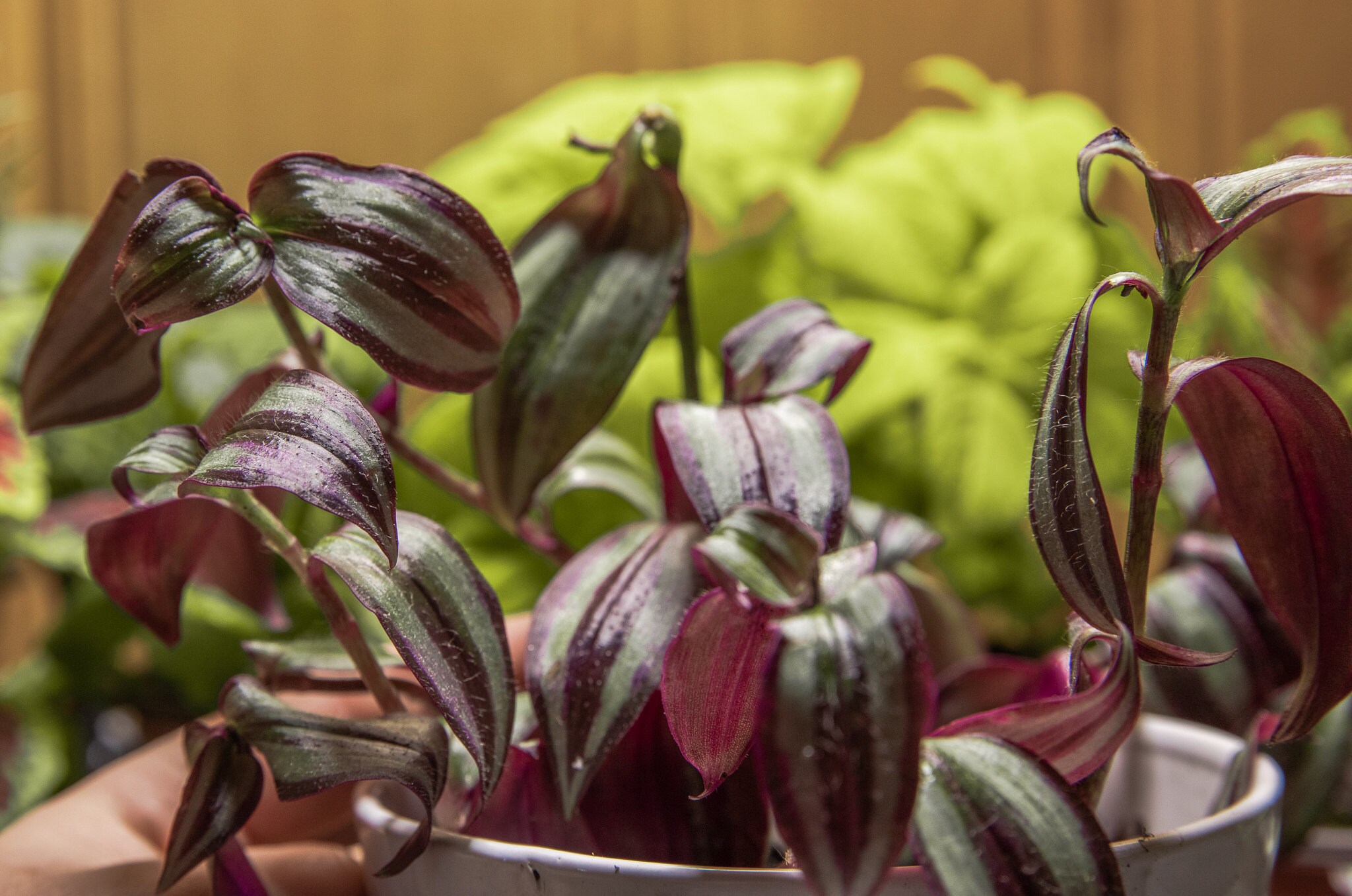
T. Zebrina
Tradescantia erythrocarpa is similar to pallida in growing requirements, but has red petioles and purple veins like pallida. However it's leaves are solid dark purple (not mottled like albiflora or fluminensis). It's leaves are also less tapered than the other varieties. This plant is native to Texas and Mexico, but can do fine in more humid areas with cooler night temperatures (I found this out by accident on my last trip home to St. Louis). T. Zebrina can spread aggressively like pallida, but it doesn't seem to be as invasive because the runners are shorter.
Care for Tradescantia
Tradescantia can be planted in full sun or part shade. During the spring and summer, water often enough to keep the soil moist, but well draining. It's helpful to let the plants dry out a bit between watering during the winter months to prevent rot (ever notice how your houseplants are much happier when you're on vacation?). Another benefit of Tradescantia is that deer and rabbits tend to leave it alone. I haven't had any problems with these plants, but you should always use whatever IPM practices work best in your garden (e.g., deer fencing). Tradescantia grown outdoors can grow like a weed and choke out other plants if not kept in check. You can minimize spreading by trimming off new runners at the base, and pulling up any plants that get away from you. Taking cuttings is a good way to quickly fill an area with more of your favorite plant.
Water & Soil Requirements
Tradescantias love water! They should be watered very regularly and thoroughly to keep them moist. Deep watering is the way to go and you will know by the weight of the pot. Feel the weight of your pot when the plant is dry. To "deep water" your plants, water thoroughly and let it drain 3-4 times. You will know when your plant feels heavy but is no longer draining water, that it has been fully and deeply watered. Although Tradescantias love water, be careful not to over water them. Be sure to check their soil often and only water when the soil is dry up to your first knuckle.
This plant is an understory plant and does best in moist but well drained soil. They do best in soils that don't have a lot of decaying organic matter, so using mulch to maintain moisture is very important when growing them in containers or they will get root rot if allowed to sit in overly moist conditions.
Propagation
Tradescantia propagates easily by cuttings or leaf pullings. Sometimes I get little plants growing in my other plant pots that live below my hanging Tradescantia, where leaves will fall off and they take root again without any intervention from me. How cool is that? I've also successfully used leaf pullings to propagate plants in water.
Taking Cuttings
The Tradescantia is very easy to propagate from cuttings. Cuttings can be taken anywhere on the plant and root very easily, as long as they have a shoot or leaf bud on them. Make your cut just below a node (the place where a leaf or shoot attaches to the main stem). For the best results, when cutting use a sharp blade to avoid bruising the stems. It is commonly rooted in water or soil, though I prefer rooting in water because it makes measurements and labeling easier.
Stem Cuttings
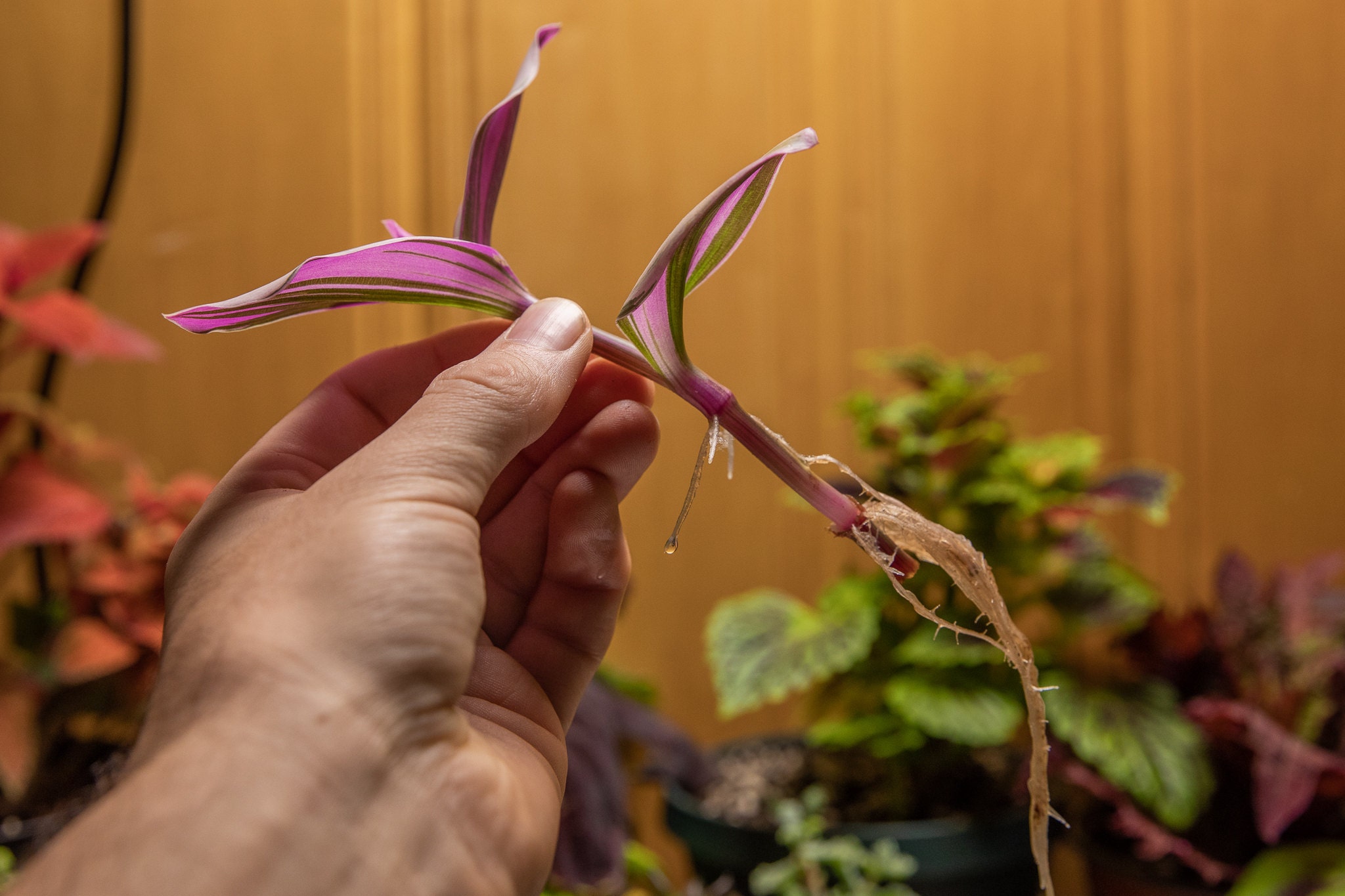
Take a cutting (5-8 inches) from the end of a stem, and strip off all leaves except for the top set. Place in an inch or two of water until new growth appears. Then transfer to a pot with well draining soil.
Leaf Pulling Propagation
Pull off a leaf, and hold it so the bottom-most part is submerged in water. Roots will eventually form, and you can plant the new plant as long as the roots are at least an inch long (and big enough to support the growing tip). I haven't tried this with just a leaf (yet).
Water Propagation
To root in water, fill a small cup or vase with water, take your cuttings and simply set each cutting in the cup of water. Change the water when it starts to look dirty, which I find is every 3 days or so. This is my absolutely favorite way to propagate because watching the roots grow is absolutely thrilling.
Soil Propagation
After taking your cuttings, place them in moist soil (1/3 potting mix, 2/3 perlite works well) and cover the containers with plastic, using a rubber band or twistie-tie to hold it down. An alternative method is to use rooting hormone on the cut end of the stem.Some varieties require four weeks for roots to form, but Tradescantia can normally be transplanted in as little as two weeks. If you are taking cuttings for use in floral arrangements, make sure to wait until there is at least two sets of leaves before transplanting the new plants.I like to propagate a lot of my plants at once while they're still young. It makes keeping track of them easier and allows me to try out different techniques on different plants.
One thing that's really cool about Tradescantia is that it can form little "babies" off of its runners and these babies can be removed and put into their own pot! I like to let them grow for a while before doing this so they have some roots of their own, but you could go ahead and do this as soon as you see the little "babies" popping off.
Pruning
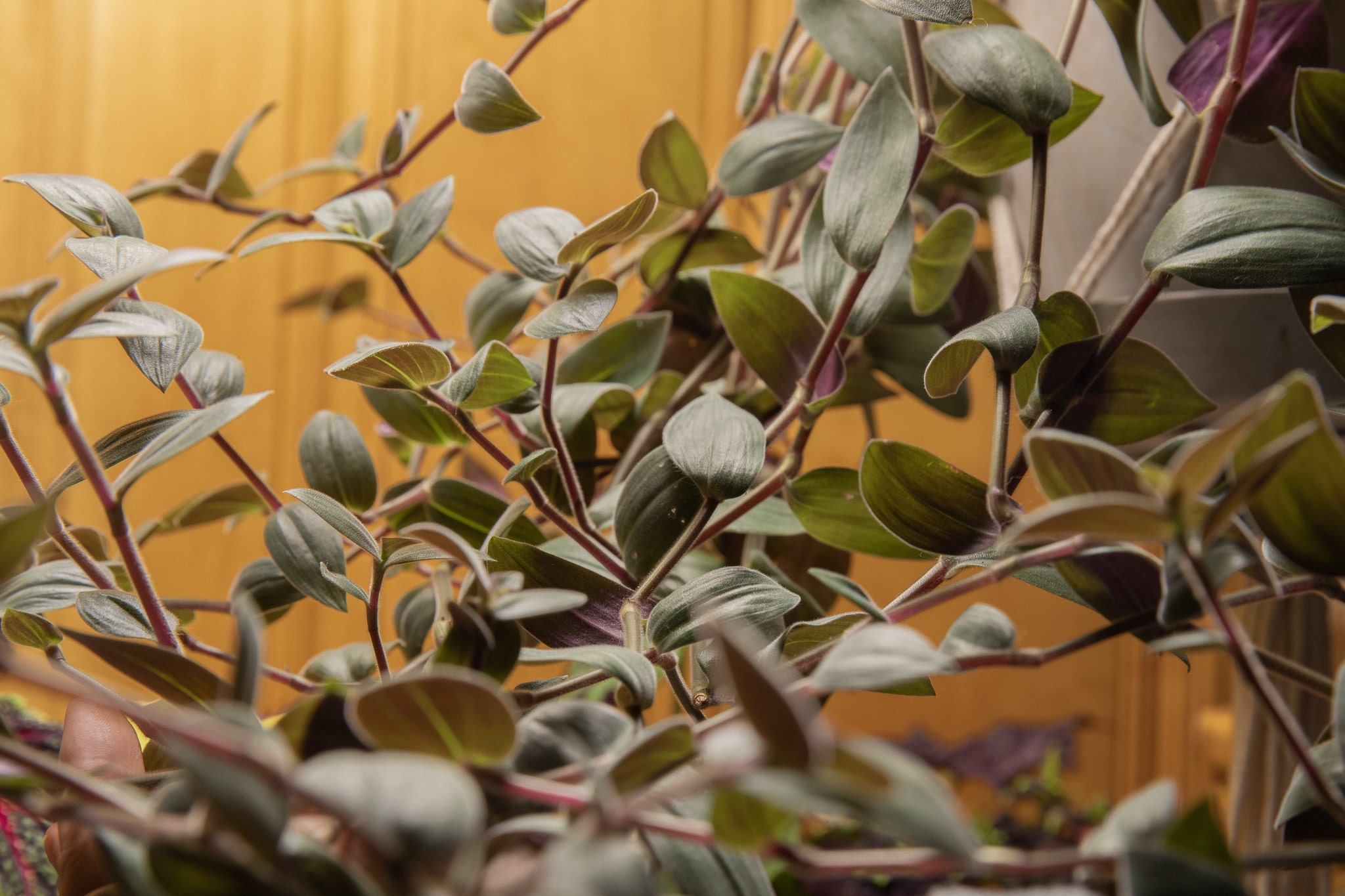
The Tradescantia is a very easy plant to prune or shear, so trimming it is often done to keep it from growing everywhere, or to bring out a different look. To maintain it's height, remove the new shoots that appear at the base of the plant and any dead leaves that appear throughout its growing season. You can also trim it back lightly in late summer/early fall before new growth begins.There are several ways to prune this plants to accentuate different characteristics of the plant. If you want more red color on the leaves, cut off all new growth and old leaves in late summer. This will also make it look fuller and prevent legginess and trailing.The easiest way to care for this plant is to just pinch or snip off any dead flowers or stems right away. Another option is to snip off the dead leaves and cuttings (regardless of season) at the base of the plant. This will not only maintain a fuller plant, but will also put out new growth near the top or middle of the plant, giving you two plants for the price of one!
Repotting
Repotting Tradescantias prefer to be repotted in soil that drains well and allows some air around the roots (i.e., not pure peat or moss). You can use pretty much any pot you like; these plants don't care about the style or color of the pot. I would avoid getting too big of a pot, though, because it can make water less effective at reaching the roots. I like to repot my plants every other year in the springtime because it encourages new growth and also gives me a chance to clean up any dead leaves or bracts (those are the leaves that look like tiny palm trees). I typically prune out about 1/3 of the plant when repotting, but you could prune more or less depending on what you want to do.
Pests and Diseases
The most common disease on this plant is caused by the fungus, Phytophthora . It is fatal and will cause all of the leaves on a plant to turn brown and fall off. There is no way to cure it once it has struck, so prevention is key! Do not over-water your plants and make sure they are planted in well-draining soil mixes.
If this disease strikes, remove the plant and keep it isolated from any other plants you may have. Do not put the diseased plant in your compost pile.The powdery mildew fungus will cause a white powder to form on top of the leaves and stems. This can be treated with a sulfur based fungicide at bud-break time in spring.The most common insect pests are spider mites and thrips. Spider mites often go unnoticed until plants have been seriously damaged by them, but can be treated with a miticide or insecticidal soap spray. Thrips cause the leaves to turn brown and curl up. An easy way to check for them is to hold a leaf up to the light, if you see little white spots moving, that is a good indication of thrips. They can be killed off with an insecticidal soap spray.Check your plants often for signs of pests and diseases, and treat them in a timely manner and you should not have any problems!
If you have any questions about Tradescantia or would like some advice, feel free to message us feel free to a comment.
Enjoy!