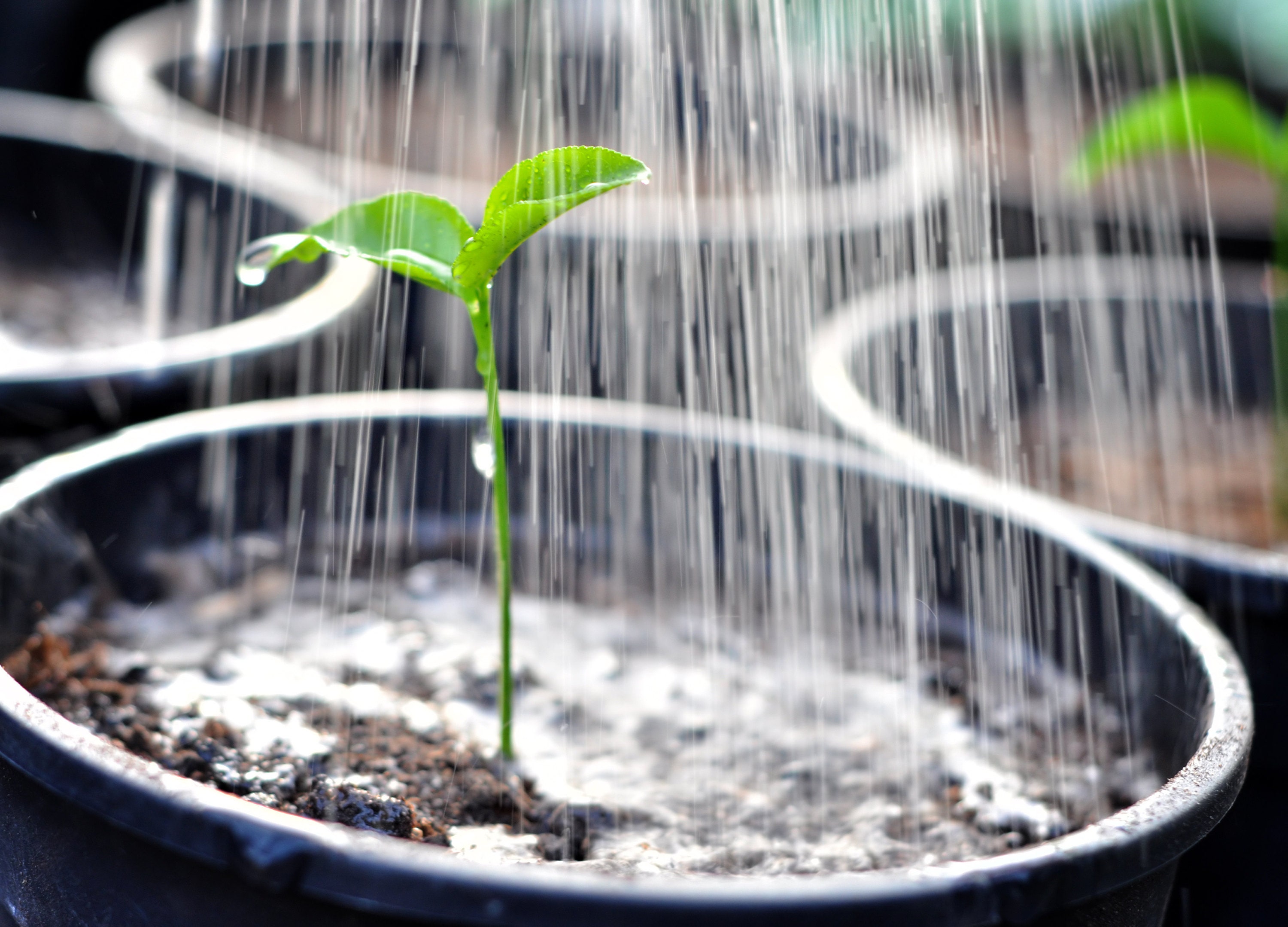
One of the most valuable snippets of information I've ever received on how to get my plants to thrive was on how to water them. It sounds so simple that one would think it to be common sense but for real...it isn't.
This critical piece of elusive intel evades beginners more often than not and can mean the difference between feelings of true success and your living in the habitat of a joy-filled jungalow, or a barren wasteland filled with dead plants, feeling like a failure and the belief system of "I can't keep a plant alive." So, I am here to demystify water for you. Read on.
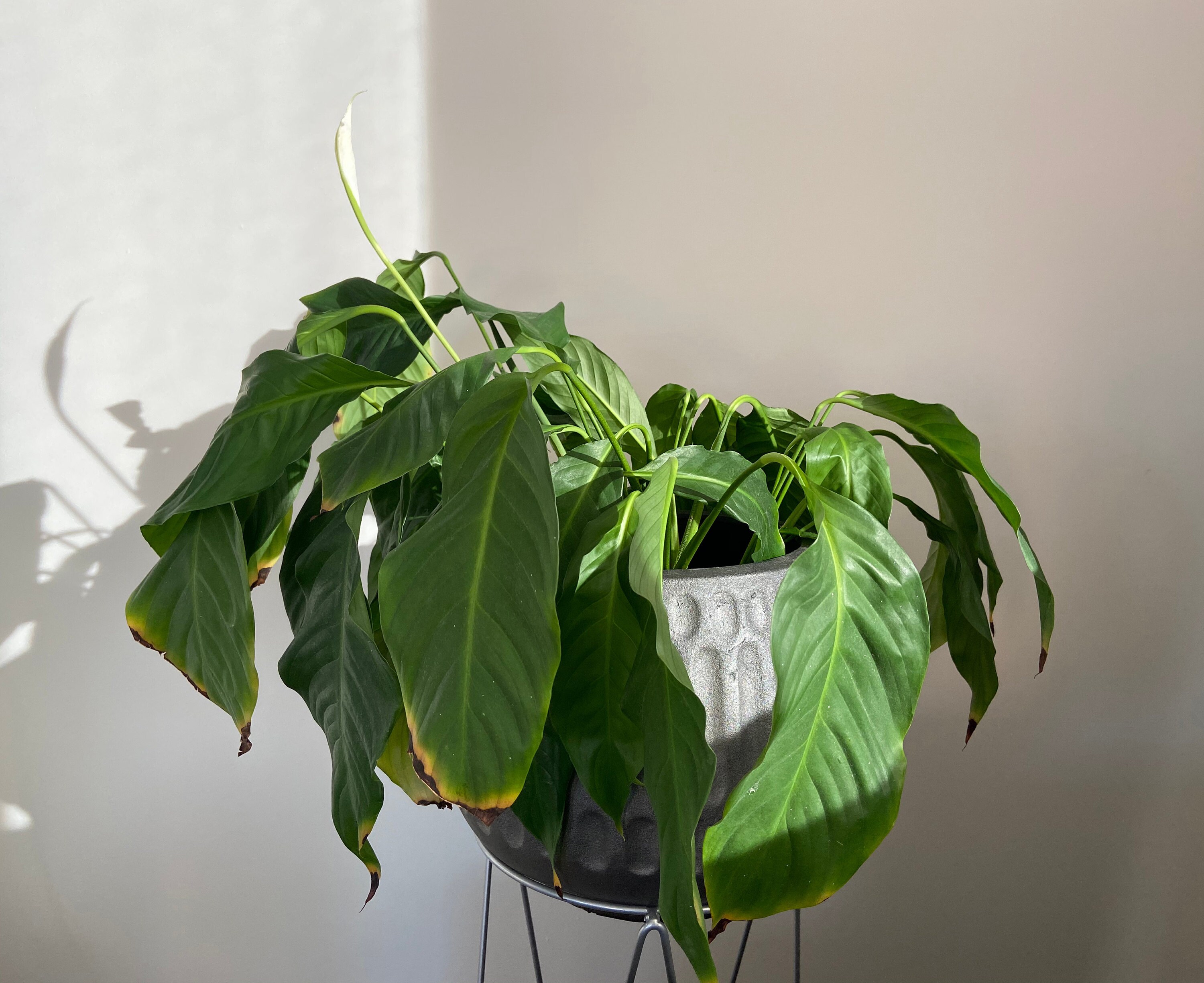
When some of our plants need a drink, they will tell us quite clearly. Our Peace Lilies and Coleus will droop as if they are dying of thirst, putting on a show as the drama queens of the plant kingdom they are, and like magic, an hour or two after a deep-watering, they will be standing up proud, strong as if they weren't just lying limp over their pots a few short hours ago! Others won't breathe a word of their distress until you wake up in the morning and what once appeared vibrant and much more importantly alive, is now dead.
Growing up, I watched my mom walk around with a watering can while she gave all of the house plants a drink of water, one at a time. So, as all things go, when I grew up...I did it the same way my mom did it. The thing is...I was an "oh-shit-I-forgot-to-water-my-plants-again" plant owner in my 20s. I was not a hyper-vigilant plant-nurturer like my mom. And-so-therefore...(ahem) because I was only giving them (what I now refer to as) "dainty little sips" of water, when I remembered to water them. When I forgot to water them...which I did...often, they (quite shockingly) died!! When they died...my heart broke. I then felt I simply sucked at plants, owned "I am not a plant-person" and gave up on owning any (that we're dried or made of silk)...for decades.
Around 20 years later, I ended up receiving a plant that was truly important to me when my grandfather passed away. It was a beautiful Peace Lily. I cherished it. It was absolutely huge and thriving in a 20" floor pot and over about a year's time, I had slowly and systematically murdered this beautiful beast, until it had withered down to a 6" pot. I was beside myself holding it out drooped and wilted (and I was sure it was wishing I would just throw it in the dumpster and get it over with already) when I walked over to my friend Chris - a true plant whisperer - and I said "please save this for me!" And He did. When he brought it back a few weeks later, vibrant and thriving, I was astounded. I asked, "What did you do??!!!" He replied with joy to the gratitude and awe he was receiving, "I watered it."
Years later, I reflected that every "green-thumb" I'd known had told me the same thing. The key was in the miracle of water. Not just that they watered their plants...but how they watered them. It sounds so simple. But to the "not-yet-plant-person", it's a mystery. If you overwater you will straight up commit murder. Succulents and cacti...snake plants and tradescantia (along with most others) will be dead in no-time-flat from over-watering. In fact, over-watering is deadlier faster than neglect and under-watering is. Both will kill your plants, so the goal is to give your plants just enough water. But what is "enough water?"
When to water each of your plants is dependant on which plant it is and what time of year. Some need to be dry down the first knuckle, others to the 2nd...some...50% of the pot needs to be dry. Then there are the plants that need to stay damp/moist at all times. So, that part varies dependant on the type of plant. Light, climate (humidity and temperature), and soil types also vary. I'll give you way more on what I like to call the Fab 4 in my next post.
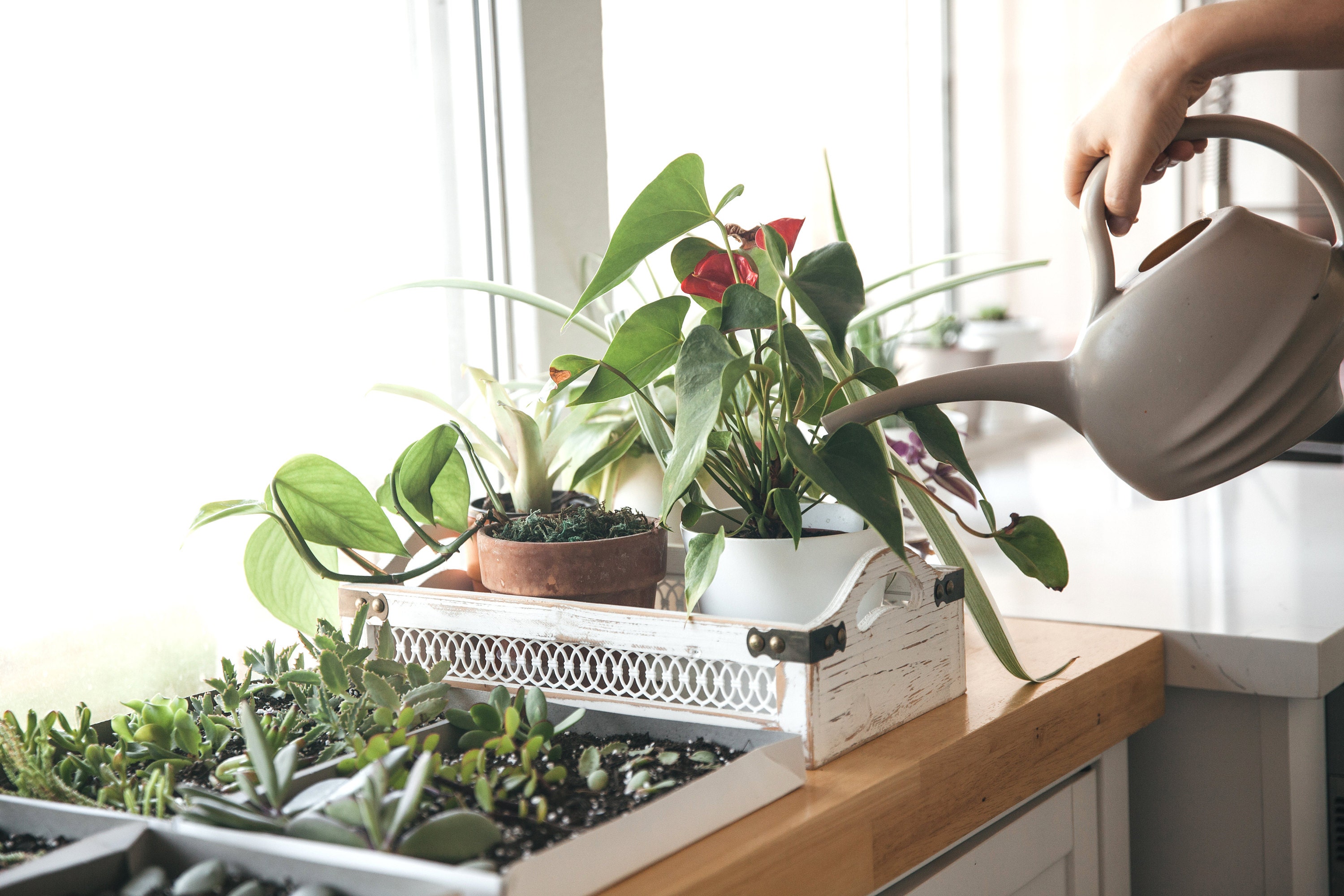
Now, what I can tell you is, you don't have to retire your watering can. I use mine often and when those Peace Lilies are in crisis and I simply don't have the time to spend deep-watering everything in the house...I pull out my handy-dandy watering can and give everyone a quick sip and keep it pushin! However, the one thing I have found to be true about every plant I own (and that doesnt mean I own them all...yet) is their need for at least occasional deep-water.
Once I started to employ this 200 IQ strategy, my plants began to truly thrive. I have taught it repeatedly and I am totally convinced that it's a game-changer. It's called "Deep Watering" because that's what it is. It's a method that makes complete sense once you get your head around it. Here's how to do it:
How to Deep Water:
Once u know that your plant is dry for it's type (which is for most plants, at least dry to the knuckle) - lift the pot and feel it’s weight. This method is all about how your pots feel, before and after you water them...so pay attention carefully to their weight in your hands.
- Take your plant-baby of choice over to your sink or another water source where you can both water, and let it drain in the same place.
- Sit it down into it's basin where it can drain as you water it.
- Water slowly, under the leaves until the pot fills.
- Let all of the water in the top of the pot drain out through the bottom holes of the pot.
- Watch carefully to see whether the water is going out of the sides around the soil (between the soil and the inside of the pot) or if it's actually being absorbed into the soil itself.
- If the soil isn’t hydrating…meaning it's too dry and locked up to absorb the water and it's all just going around and out the bottom) then you will need to soak and aerate that plant.
- To aerate means to break apart that locked up soil so that water and nutrients can get to the roots of the plant. To do so, employ a chop-stick, a shish-kabob skewer, or even a fork if the soil isn't too deep. This isn't a bludgeoning, it's a gentle process and the key is not to break the entire root system while doing it. Just water and gently poke down into the soil/medium in several places so it unlocks the fused medium, allowing it to hydrate again.
- Once the soil is unlocked - you are back to deep watering
- Water it slowly and let it drain again
- Then again.
- Once the water is no longer spilling out the bottom holes, pick it up. Is it heavy? If not, do it again.
- You may need to water the plant four or five times.
When your plant has been truly deep watered, you will notice how heavy it is in comparison to how it felt in your hands before you watered it. That is when you know it has been truly deep watered.
Once you have deep watered all of your plants, you will find their watering schedule might change. So, this is where your pointer-finger comes in. There is no such thing as a plant-person that doesn't get dirt under their nails often so, poke your fingers down into the soil feel the d.
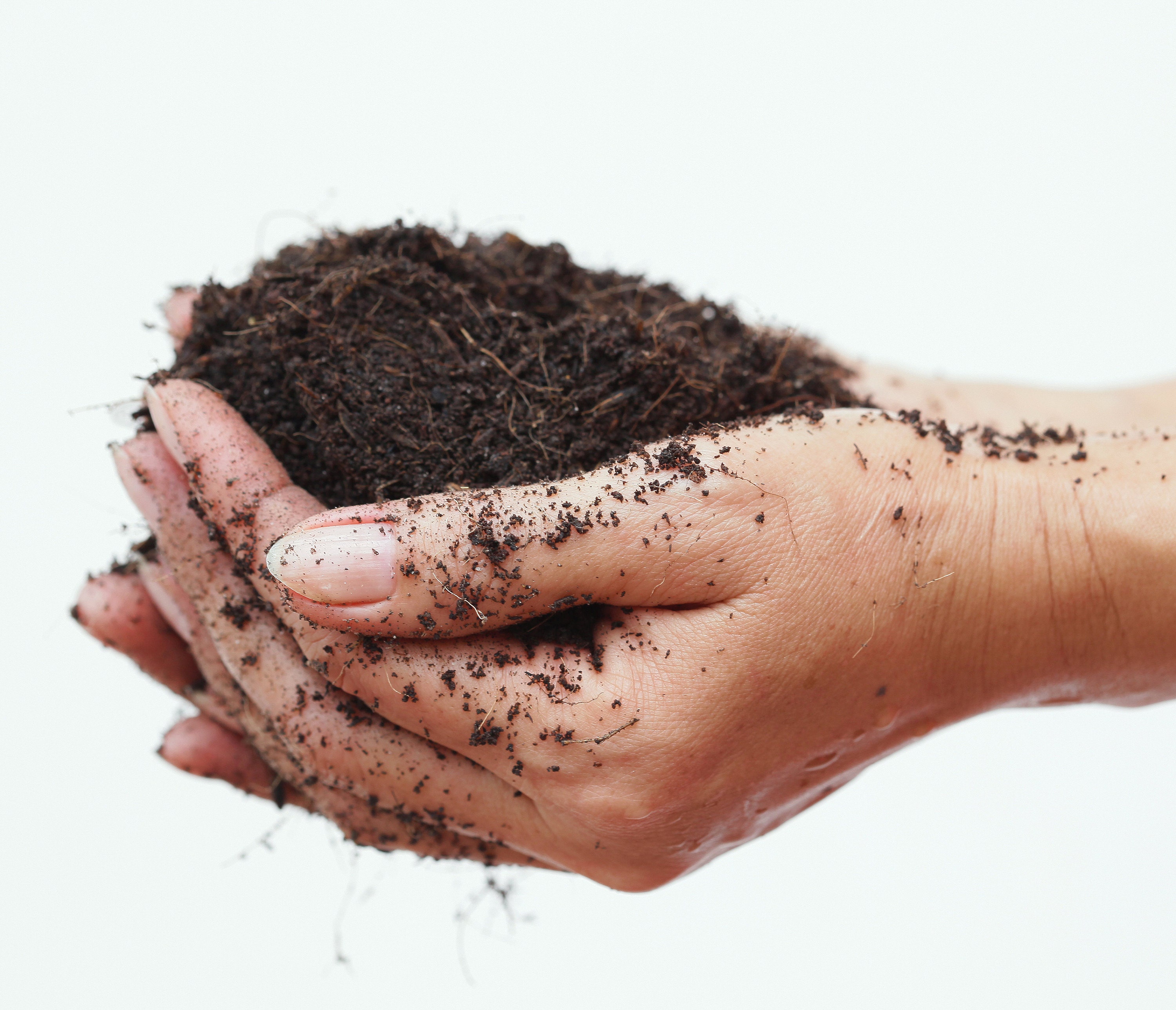
That being said, this is a judgement-free zone and even if you aren't down with dirty, you can still want and have a thriving houseplant (or 10).
So, if you are super bougee about dirt under your nails - you can grab yourself a water meter. As someone who just bought a plant that needs to be 50% dry before watering - I might even take the one I bought a year ago out of it's packaging because my fingers aren't that long!
We'll dive deeper into pots, mediums, light and climate in the posts to come. For now, if you have a question on a specific plant, feel free to shoot us a message in the comments, reach out on Etsy or Follow and shoot us a DM through our Facebook page @PeaceLoveandLilies.